Learning to fly: a radio and a simulator
Two new arrivals this week, and they belong together. A RadioMaster Boxer Crush radio and a VelociDrone licence. I want to learn how to fly a drone, and this pair is all it takes to start. No aircraft required.
RadioMaster Boxer Crush
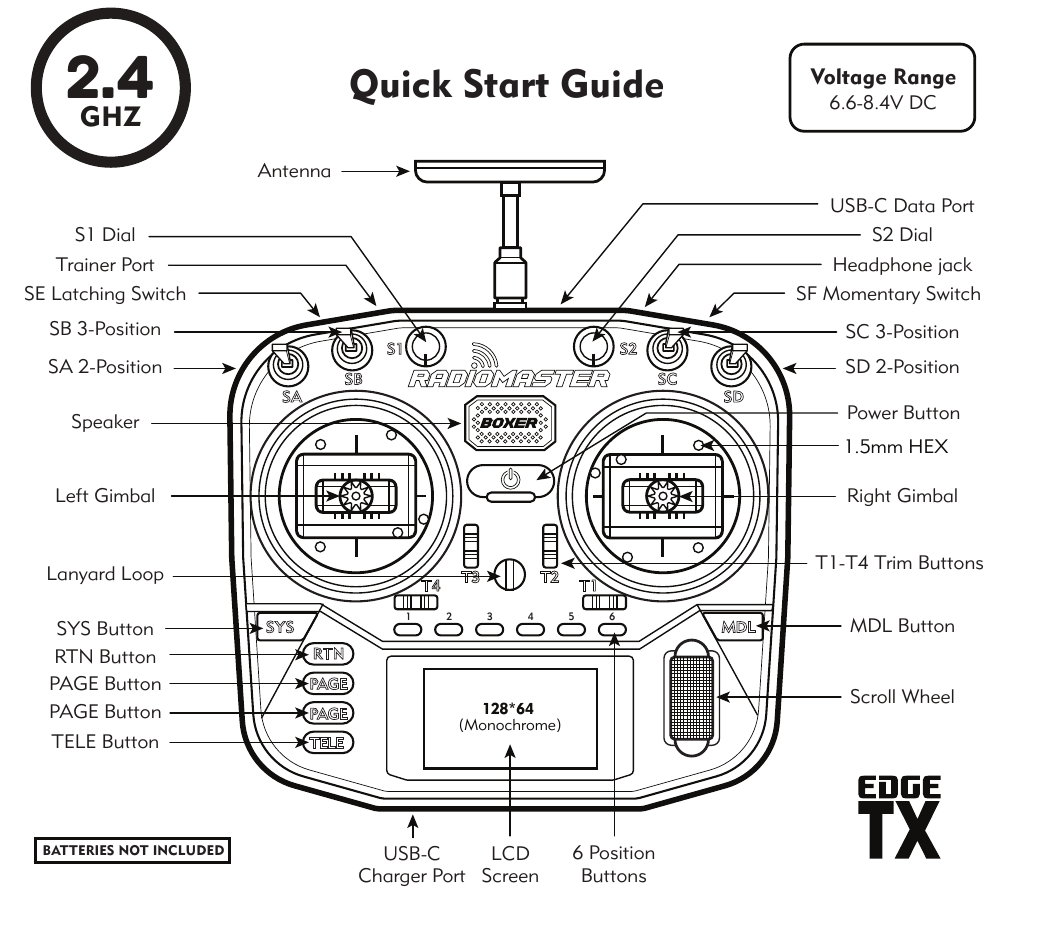
Every control, port and button on the front panel. From the official RadioMaster Boxer Quick Start Guide.
The Boxer Crush is a full-size EdgeTX radio with ExpressLRS built in. The front has every control and button, plus two USB-C ports. One is for charging the battery and one is for data. The empty bay on the back is a JR module slot, so the radio can grow later (900 MHz ELRS, Crossfire) without being replaced.
In Norway you can find it at Elefun, and RadioMaster’s own store lists it at $189.99, before VAT and shipping. Mine came from AliExpress, so the arrival check mattered! Physical first. The gimbals were smooth end to end with no play, every switch and the roller moved freely, and the box had everything in it according to the manual.
Then the real test, the firmware update. The ELRS module shipped with firmware about three years old, and a radio that takes an update is a radio that is what it claims to be. I built the new firmware in the ExpressLRS web flasher for the Boxer’s internal 2.4 GHz TX (EU LBT region), downloaded the file, let the radio host its own WiFi hotspot and uploaded the firmware at http://10.0.0.1.
The trap was the browser. With a bare IP address it tries HTTPS first, and the hotspot only speaks plain HTTP, so the page refused to load until I typed the full http:// address. After the upload the module reported the new version, the LBT region and a fresh commit hash. A cloned RF module hangs or prints garbage at exactly that step, so the update doubled as the genuineness check.
VelociDrone
VelociDrone is a commercial FPV racing simulator and the official MultiGP sim. It runs natively on Linux through a community installer, so no Wine. The Boxer plugs in over USB and shows up as a joystick. Radio in my hands, sim on the screen, nothing else needed.
One feature sold it. You can add your own drone. The sim lets you enter the specs of a real drone (frame, motors, props and battery) and even import actual Betaflight rates and PIDs. So practice happens against the same numbers the real drone flies, and when a real drone eventually enters the picture, the sim can be set up to fly as close to it as a sim can.
How the learning works
A sim crash costs nothing, and that changes how you practise. The plan is boring on purpose. Throttle control and hovering first, then circuits, then flying a track without touching a wall. Speed comes last. Every hour in the sim makes the radio feel more like an extension of my hands, and the expensive mistakes happen where they are free.